 |
 |
 |
|||||||||||||||
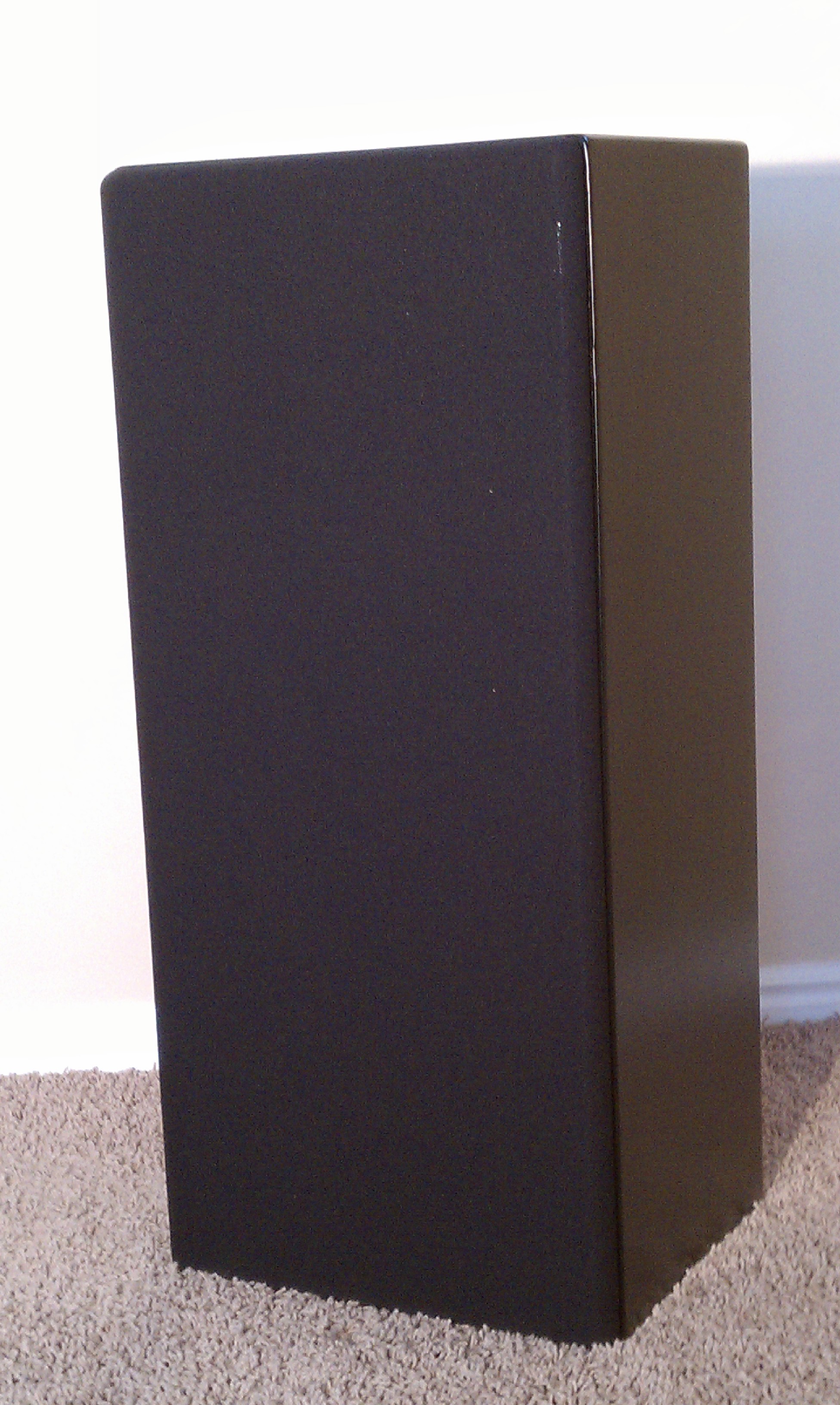
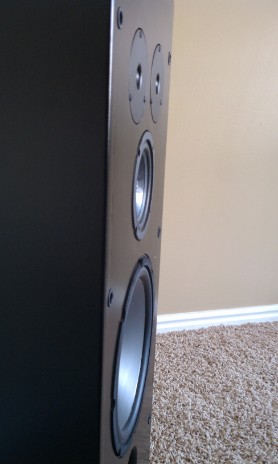
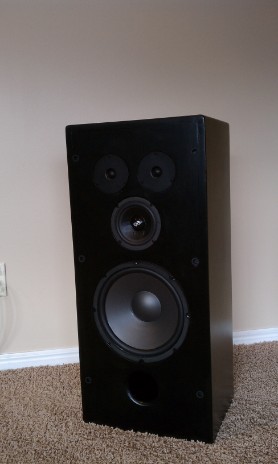
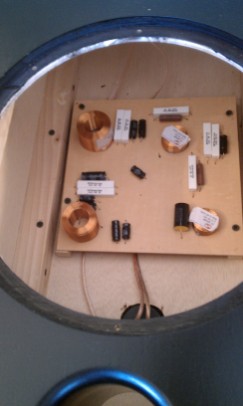
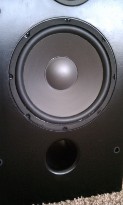
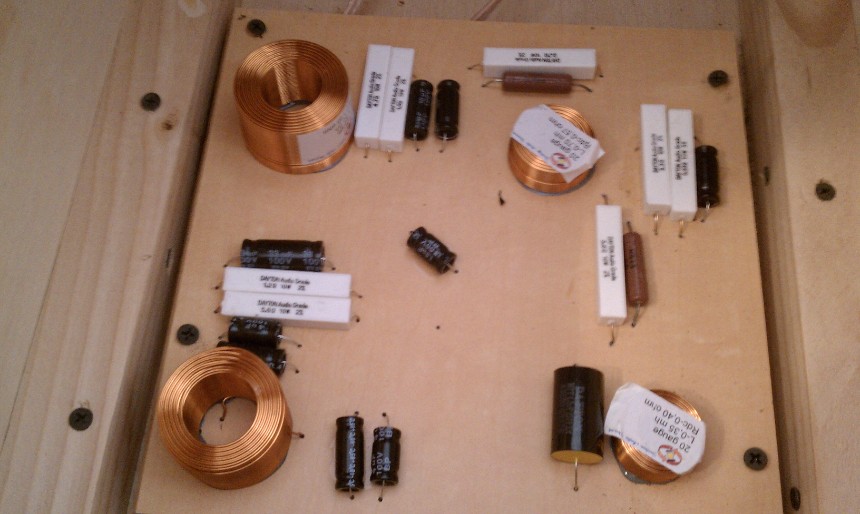
My goal with this speaker is to design it so it will be a high-fidelity (hi-fi) loud speaker. The speakers and components used are the best for the price. I constructed a three-way, second order crossover at 800 Hz and 4000 Hz. A crossover, a network of resistors, capacitors, and inductors, delegates certain frequencies to specific speakers which is important to producing high quality sound. Each speaker has an impedance equalizer to minimize distortion and allow the full range of the frequencies to be as clear as possible. To equalize the volume of all three speakers, I used the best resistors. Please look at the specifications for a more in-depth analysis of the speaker. Each driver hole was cut out precisely so it fits flush with the outside of the box for improved appearance and performance. If you would like more images, please let me know.
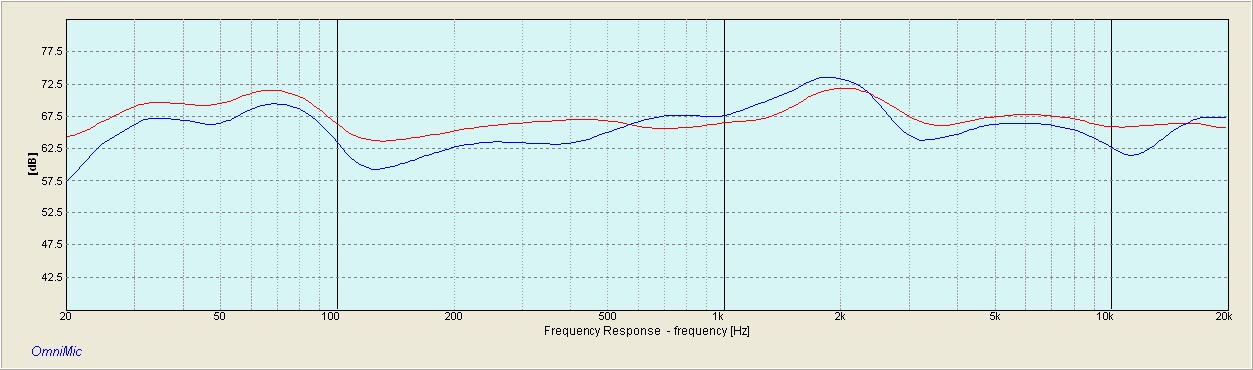 Impedance Impedance, the opposition to the flow of electricity also known as resistance, is an important factor to consider when purchasing a speaker, because less than 8 ohms can lead to overheating and ultimately the failure of your receiver. Impedance of a speakers is not linear or set for all frequencies. It changes depending on what frequency the speaker is producing. With an analyzer, I measured the impedance of the speaker through a range of frequencies. I used this data to calculate the values of resistors and capacitors needed for the crossover network. Once again, I imported the data along with the frequency-response data into special software which aided me in my crossover design. The frequency response and impedance data are essential for a consistent outcome. The image below is a picture of the impedance graph for the speaker after completion. There is a single woofer, mid-range, and two tweeters. When you run two 8-ohm speakers in parallel this results in 4-ohms impedance, which you can see in the bottom right corner of the graph below. The impedance value of this set is 10.289 which is acceptable for all home audio receivers. The speaker specifications are 130.67 watts continuous and 261.335 maximum taking into consideration the added resistance from the L-pads and the limitations of the speakers individually. 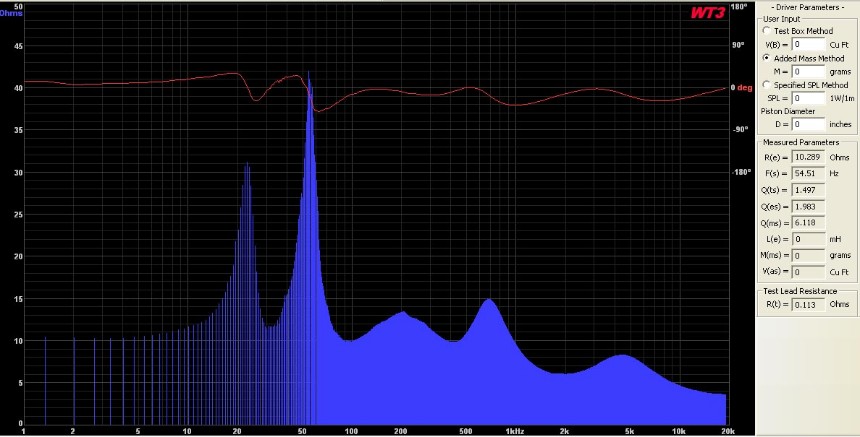 Construction Birch wood is a very common type of wood used in speaker building. For these speakers I used 3/4-inch birch wood plywood and support braces inside the box so the outside could be free of screw holes. This allowed to create a smooth finish. There is a 3-inch port which I cut using a router that rounds over the edge creating a smooth transition to the port. The roundover edge is not only pleasing to the eye, it serves another purpose. Keeping the velocity of the air less than 10% of the speed of sound prevents "port noise". Port noise is the sound of air rushing in and out of a ported speaker.
 A picture of me measuring the Frequency Response Data 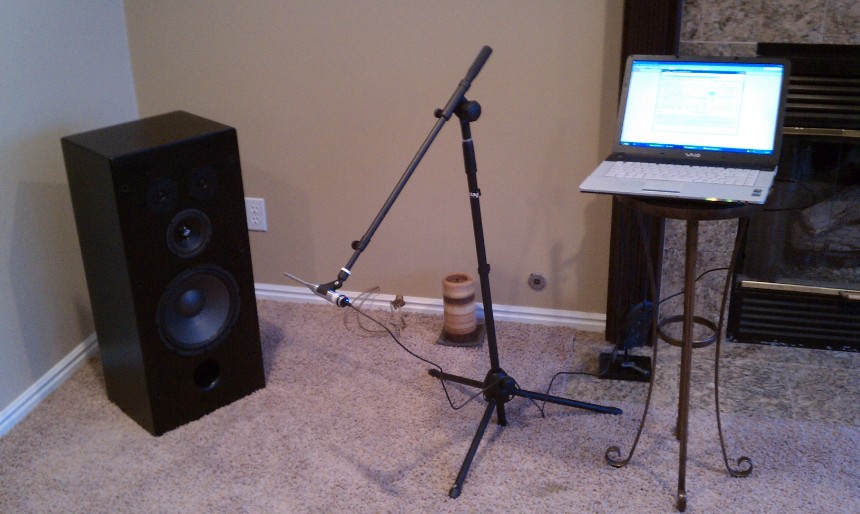  |
|||||||||||||||||